By Dr. Steve Derrington, board-certified in physical medicine and rehabilitation
If you have knee arthritis, you may be wondering whether a bone marrow injection can regrow cartilage. I get a lot of patients asking about stem cells, and many of them lump every product together as if they were all the same. Here is what I tell them.
The short answer
Typically, we are not seeing regrowth of cartilage. What we are doing is changing how the cells in the joint function and how they respond to stress and activity.
When those things change, pain gets better and function gets better. You’re able to do more, and you don’t pay for it the same way you would have in the past.
What is happening inside an arthritic knee
In an arthritic joint, you often have cartilage that is damaged. You also have synovial fluid, the fluid inside your knee, that’s extra inflamed. It has too many pro-inflammatory chemicals and not enough anti-inflammatory chemicals.
That inflamed environment is hard on the joint. Before treatment, a short walk might leave you unable to do much of anything for a few days afterward.
What bone marrow concentrate is meant to do
Bone marrow concentrate, which people usually call stem cell treatment, uses cells from your own body. Your pelvis holds bone marrow cells in high numbers, and the areas with arthritis changes hold them in low numbers. I concentrate those cells and place them into the joint, or especially into the subchondral space, which is close to the cartilage but inside the joint. In a sense, I am repopulating those areas with more cells.
The idea is to take what your body already does well in other places, isolate and amplify that response, and use it where it isn’t happening enough.
I think of it as powering up the cells that are already there. The cells and growth factors interact with your own cells and help them work better. They go back to doing their normal repair processes in an environment that’s calmer, where before they were limited by inflammation. The joint fluid becomes a less toxic environment, and the tissues, whether the cartilage or the meniscus, become more resistant to the forces we put on them through daily activity, the gym or sports.
What this can look like day to day
As your knee responds better, it doesn’t get irritated the same way. You can build on your activity to build strength and endurance, you can move the right way, and you’re not compensating because of pain. Staying active after treatment creates a positive feedback loop: the area that was injured responds better, the tissues are healthier, and you keep building.
When I consider bone marrow concentrate for knee arthritis
For earlier, milder problems, PRP prepared the right way and at the right dose can be very therapeutic. When you want to think about something stronger, bone marrow concentrate is typically where I go for more advanced conditions: grade three or grade four cartilage loss, significant loss of joint space, or swelling in the bone next to the cartilage. In those cases it is a decision on top of, or in addition to, PRP.
There are gray areas, and that’s where a conversation with an informed patient matters. I explain how I choose between them in PRP vs. bone marrow concentrate: how I decide which one fits.
Movement stays the foundation
Whatever else you choose, movement is foundational. Physical therapy, the biomechanics of how you move, and building the right kind of strength all stay part of the plan.
Why my patients come in
For most of my patients, the goal is function. They want a knee that doesn’t hurt so they can play pickleball three days a week, hike, golf two days a week and stay active with the people they care about.
Those goals fit life in Carlsbad and Laguna Hills, where people surf, golf, hike and play pickleball. If you’re weighing your options before a knee replacement, read Bone-on-bone knee, no surgery? What San Diego patients should know. My knee osteoarthritis page has more on knee arthritis care.
Getting an evaluation
An evaluation with a review of your imaging is the best way to learn whether bone marrow concentrate or PRP makes sense for your knee. You can upload your MRI ahead of time, and the Am I a candidate? page shows you how to find out whether bone marrow concentrate or PRP makes sense for you.
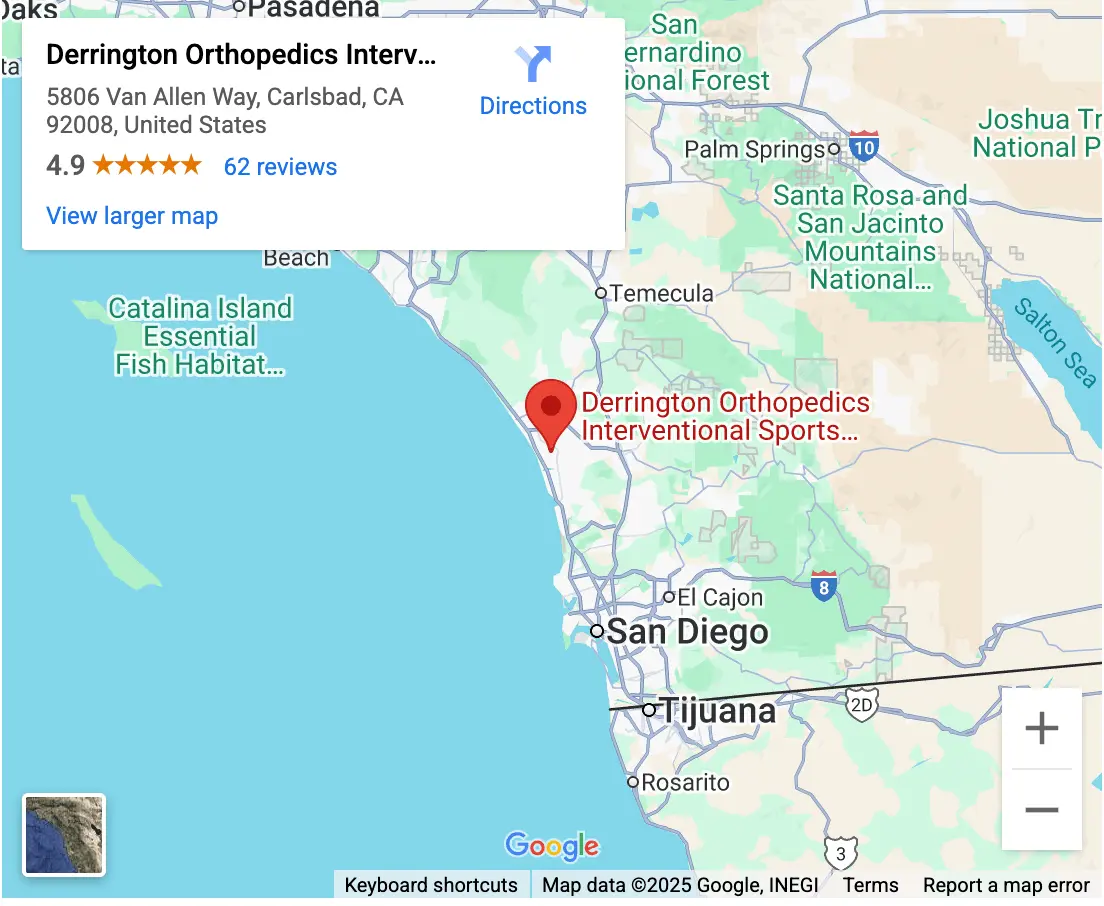
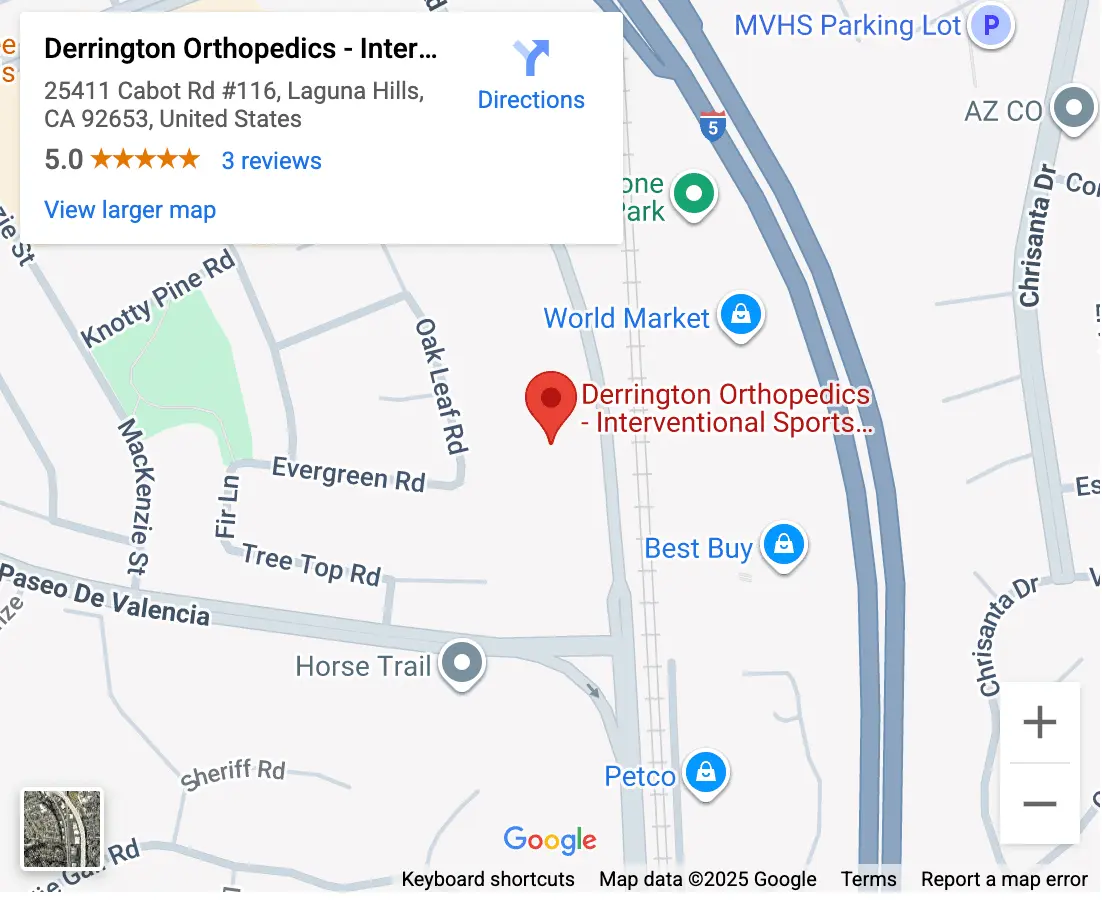
I see patients at my Carlsbad office (5806 Van Allen Way, Suite 101, Carlsbad, CA 92008) and on Tuesdays at my Laguna Hills office (25411 Cabot Rd, Suite 116, Laguna Hills, CA 92653). You can call (760) 721-4000 or request an appointment online.
Frequently asked questions
Can stem cells regrow cartilage?
Typically, we are not seeing regrowth of cartilage. We are changing how the cells in the joint function and respond to stress and activity, and that is where pain and function improve.
Is the bone marrow from a donor?
No. What I use comes from your own body. The word for that is autologous. Off-the-shelf products made somewhere else are a different thing, and many patients lump them all together, thinking they’re all the same.
If cartilage does not regrow, how can an injection help?
It calms the inflamed joint environment and changes how the cells in the joint respond to stress and activity, so the knee tolerates more.
This article is general education and does not replace an exam or medical advice for your situation. Results vary from person to person.