By Dr. Steve Derrington, board-certified in physical medicine and rehabilitation
One of the first questions patients ask after deciding on PRP or bone marrow concentrate is how long it will take to feel a difference. You want to know before you schedule time off work or your next surf session. Recovery happens in stages, and the timeline varies from person to person.
The first few days: expect some soreness
When we do these kinds of procedures, we are starting a repair process, and that process starts with inflammation. So you’re likely to have some increased discomfort for a period of time afterward.
How sore you feel depends on the area being treated. It can be mild. Many people have a handful of days when the joint is more uncomfortable. It’s rarely longer than a week, and often it’s only a few days. Then things get back to your normal baseline.
The first weeks to two months: changes begin
How people respond varies with the individual and with the condition being treated. With an arthritic joint like a knee, somewhere in the first couple of weeks to couple of months is when you notice things changing.
Early changes can come from biochemical shifts. The platelets and growth factors, or the bone marrow cells, change the inflammation level, and that’s where things can improve in the first days to weeks.
Two to six months: where most improvement shows up
When we are treating cartilage or connective tissue, the repair process takes time, over six weeks to about four months, and somewhere in that range is when most people notice things changing. Sometimes it is very quick and significant early. Sometimes it is slower, with some ups and downs along the way.
Most people by two months are noticing something changing, whether it is a little or a lot. As you get to three and four months, and especially up to six months, that is where most people notice most of their improvement.
I have a number of patients who, when I talk to them nine and twelve months afterward, tell me they feel better than they did at four and six months. Things feel more stable, stronger and more confident as the pain has gotten better and they have built up strength, endurance and the muscles that add stability on top of what the injection is doing inside the body.
If your problem is a pinched or irritated nerve
Nerve irritation, like sciatica, often changes within the first couple of weeks, and sometimes over a couple of months. The pain that used to come on quickly with a certain activity takes longer to show up.
Rehab and activity make a difference
Over days, weeks and sometimes months, you do more, and you start doing different things, depending on how far out you are and how you’re doing with guided physical therapy or independent activity. As the biological changes take hold and you build up how you move and load your joints, you can tolerate more. You have less pain and better function, and you don’t have to recover the way you used to.
I explain how I choose between PRP and bone marrow concentrate in PRP vs. bone marrow concentrate: how I decide which one fits. I also cover PRP treatment and knee osteoarthritis care on their own pages.
Planning your recovery with me
If you are deciding on PRP or bone marrow concentrate, an evaluation is where we talk through your timeline for your condition. The Am I a candidate? page shows you how to find out whether bone marrow concentrate or PRP makes sense for you.
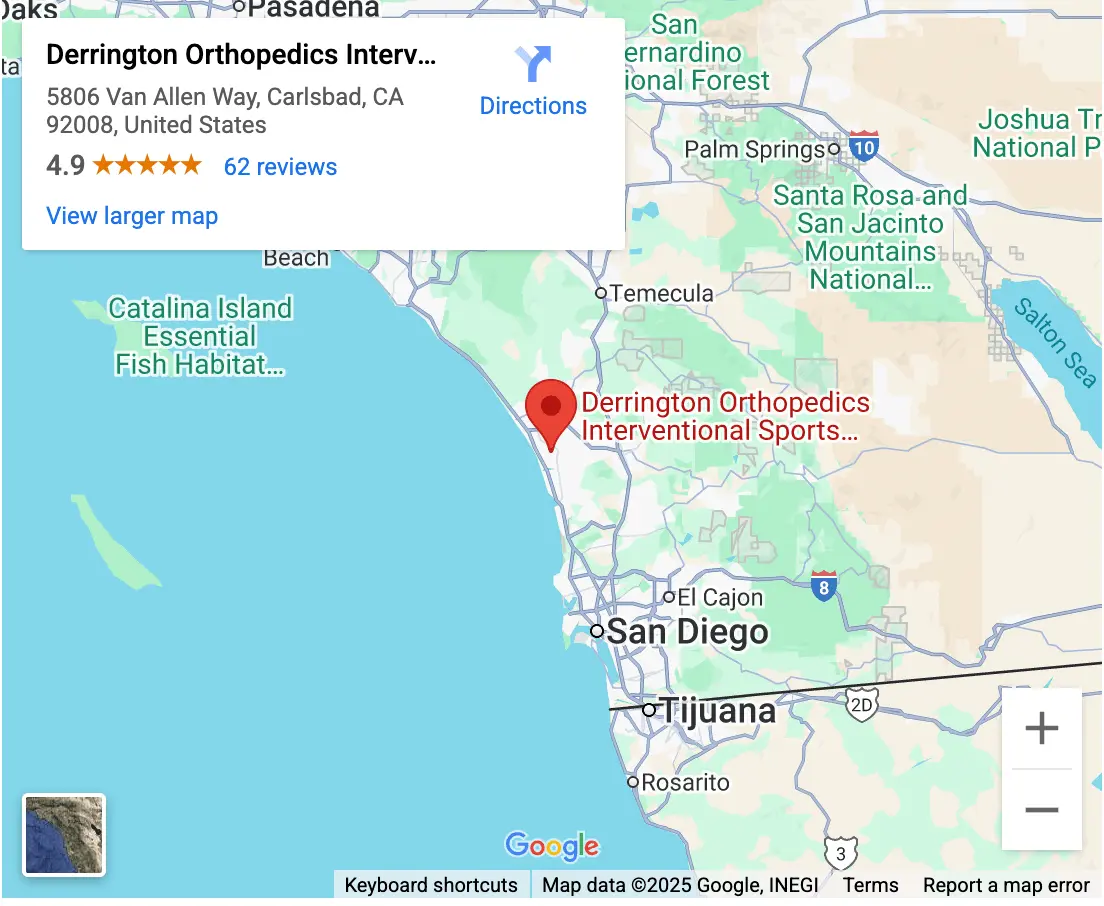
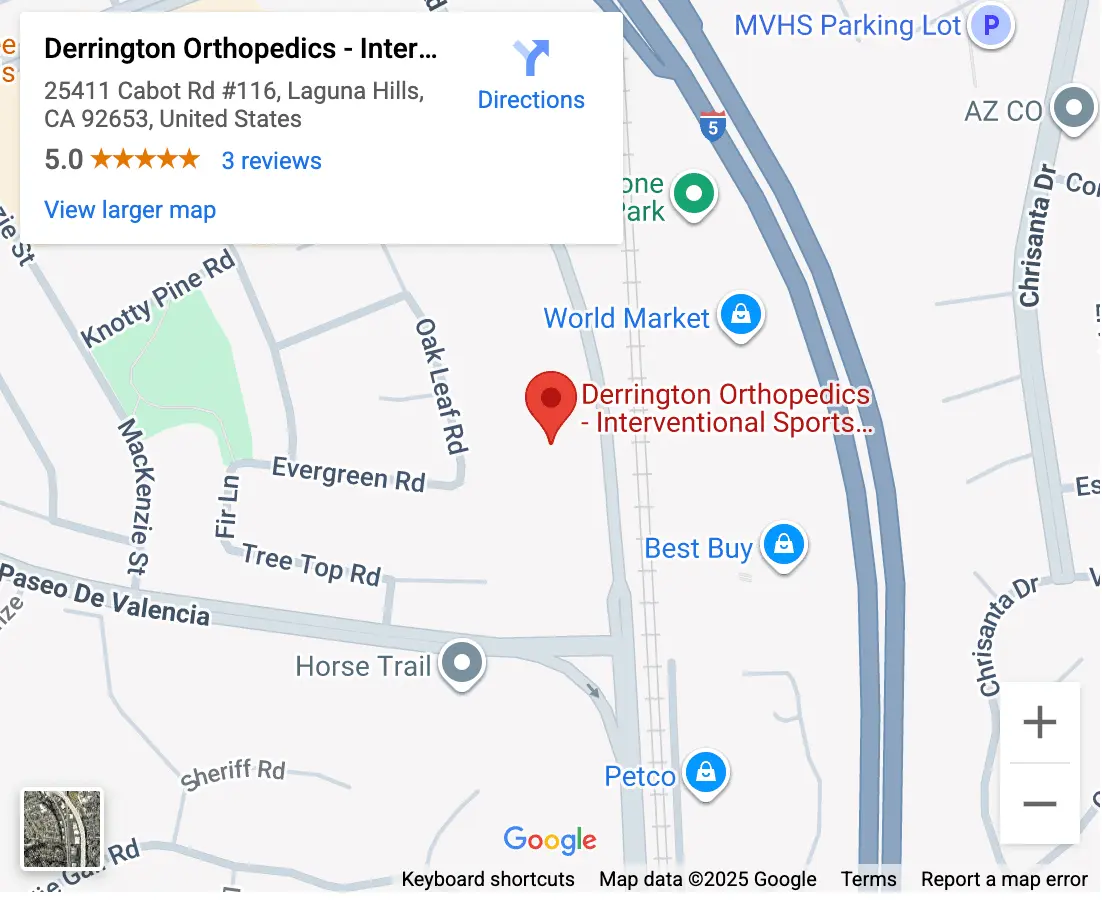
I see patients at my Carlsbad office (5806 Van Allen Way, Suite 101, Carlsbad, CA 92008) and on Tuesdays at my Laguna Hills office (25411 Cabot Rd, Suite 116, Laguna Hills, CA 92653). You can call (760) 721-4000 or request an appointment online.
Frequently asked questions
How long does PRP take to work?
It varies. Most people notice something changing by two months, and most notice most of their improvement between three and six months. Early changes can come in the first days to weeks.
How sore will I be after the procedure?
You will often have some increased discomfort in the first few days. It usually settles within about a week.
Can my pain improve before the repair process is finished?
Yes, for some people. Early changes can come from biochemical shifts in the joint, before any structural change has happened.
Can improvement continue after six months?
Yes, for some people. Some of my patients tell me at nine and twelve months that they feel more stable, stronger and more confident than they did at four and six months.
This article is general education and does not replace an exam or medical advice for your situation. Results vary from person to person.