By Dr. Steve Derrington, DO | Board-Certified Interventional Sports & Spine Physician | Regenexx-Certified Provider
Reviewed: June 2026 | Est. read time: 9 minutes
| QUICK ANSWER Most pickleball knee soreness fades within two or three days of rest, ice, and lighter activity, and that kind of soreness is normal as your body adapts to the sport’s lateral cuts and quick stops. Pain becomes more than soreness when it lingers past a week, swells, gives way, or returns every time you step back on the court. Those signals point to something structural like a meniscus, ligament, or tendon injury or cartilage wear (arthritis) rather than simple overuse. Seeing an interventional sports specialist early, rather than waiting for the pain to force a surgical conversation, often means more of your options stay open, and you keep playing the game you love. |
You felt it during a third game that ran long, a sharp pull on the outside of your knee as you lunged for a dink at the kitchen line, and you told yourself it was nothing because pickleball is supposed to be the easy sport. The next morning the knee was stiff and a little puffy, and by Wednesday it had calmed down enough that you went back out and played anyway. Three weeks later it still aches on the stairs, it clicks when you stand from a chair, and you are starting to wonder whether the friendliest game in Carlsbad is quietly wearing your knee down.
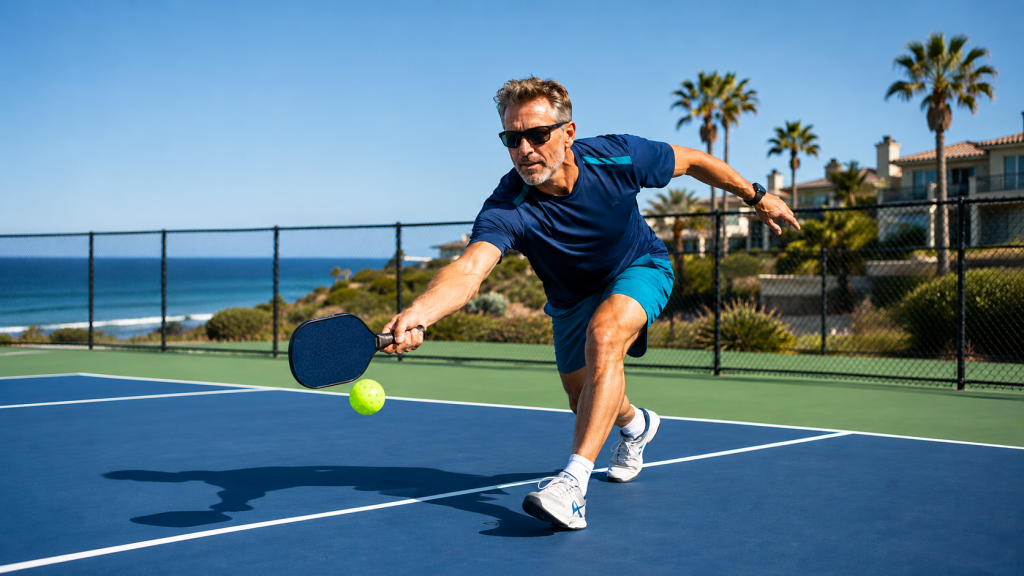
You are not imagining it, and you are not being dramatic. Pickleball is the fastest-growing sport among active adults in their fifties and sixties, and the knee takes the brunt of it because the game is built on sudden lateral movement, quick decelerations, and pivots on a planted foot. Soreness after a hard session is expected. Pain that keeps coming back is information, and it is worth understanding what your knee is actually telling you.
Surgery is not the only path, and another cortisone shot is not the only injection. A second opinion from a non-surgical sports specialist is a different conversation than another surgical consult, and it usually starts with a simple question: Is this just soreness, or is this something your knee needs help repairing?
What Pickleball Knee Pain Actually Means for Treatment Decisions
When evaluating a pickleball knee, the goal is to separate normal training response from a structural problem that will not resolve on its own. Soreness from a hard session is diffuse; it sits in the muscles and tendons around the joint, and it improves steadily over a couple of days. Structural pain behaves differently. It localizes to a specific spot, it may produce mechanical symptoms like clicking, popping, or a sense that the knee might buckle, and it tends to track with swelling that returns each time you play.
The pickleball movement pattern points toward a few common culprits, and the distinction between them drives everything that follows. A meniscus injury, the cushioning cartilage between your thigh and shin bones, often comes from the twisting load of a planted-foot pivot and shows up as pain along the inner or outer joint line, sometimes with catching. Patellar tendinopathy, irritation of the tendon below the kneecap, builds gradually from repeated jumping and lunging and hurts most when you load the knee on a bend. Early osteoarthritis, the gradual thinning of joint cartilage, is common in this age group and pickleball simply reveals it, with stiffness after sitting and a deep ache that worsens with activity.
This is where imaging matters, and where specificity becomes the difference between a useful plan and a generic one. An MRI tells the physician the grade of cartilage loss, whether a meniscus tear is degenerative or traumatic, and whether the tendon shows thickening or partial tearing. A diagnostic ultrasound, performed in the office, shows the tendons, ligaments, and other soft tissue in real time, dynamically as the knee moves, and with better resolution. Those findings decide whether you are a strong candidate for an orthobiologic approach, which is a procedure using your own concentrated platelets or bone marrow cells to support the body’s repair response, or whether a different path makes more sense. Vague labels like moderate arthritis do not guide treatment. Cartilage grade, tear location, and tendon thickness do.
Where Your Pickleball Knee Fits on the Severity Pathway
Derrington Orthopedics uses a Severity Pathway to match the treatment intensity to what the knee actually needs, rather than defaulting to the most aggressive or the most conservative option. Most pickleball knees land in the first two tiers, and the table below shows how a presentation maps to a tier and what that means for the procedure choice and your expected recovery.
| Knee Profile | Typical Tier | What It Means for You |
|---|---|---|
| Soreness that resolves in days, no swelling, full range of motion, mild tendon irritation | Tier 1 – Evaluation & Relief | Comprehensive evaluation, MLS Laser Therapy, and activity modification. Often you keep playing with smarter load management. |
| Persistent joint-line pain, mild to moderate cartilage thinning, degenerative meniscus, recurrent swelling after play | Tier 2 – Targeted Orthobiologic | Regenexx PRP is delivered with ultrasound or fluoroscopic guidance, often paired with MLS Laser, designed to support healing in the irritated tissue. |
| Advanced cartilage loss, partial-thickness tendon tearing, or a structural knee facing a surgical recommendation | Tier 3 – Advanced Orthobiologic | Regenexx Bone Marrow Concentrate, image-guided, paired with MLS Laser for recovery support, as an option before considering surgery. |
| THE PATHWAY IN PLAIN LANGUAGE Think of your knee like a well-traveled court surface. A few scuffs and a worn line just need maintenance and a lighter footfall; that is Tier 1. A cracked section needs a targeted patch from the right crew before it spreads; that is Tier 2 orthobiologic care. Only the most worn-through surface needs a full resurfacing, and the point of seeing a specialist early is to keep your knee from ever reaching that stage. |
| HOME RECOVERY LAYER After any tier of care, Redvive red and near-infrared light panels are available for daily at-home use, supporting inflammation control and tissue recovery between visits and after you play. This layer complements your in-office treatment rather than replacing it. |
Orthobiologics vs. Cortisone vs. Surgery: Understanding the Trade-Offs
Most patients walk in already running this comparison in their heads, so it helps to be honest about all three paths.
Cortisone
A cortisone injection reduces inflammation quickly and can quiet an angry knee within days. It does not repair tissue, the relief typically fades within weeks to a few months, and repeated use leads to accelerated cartilage and tendon damage. It is a tool for short-term relief, not a structural solution, with real consequences.
Surgery
Surgery is the right call for some knees, particularly a locked knee from a displaced meniscus tear or end-stage joint failure where the cartilage is gone. It also brings recovery time, anesthesia risk, and a permanent change to the joint anatomy. Dr. Derrington tells patients directly when surgery is genuinely the better path, and that honesty is the point.
Orthobiologics
Orthobiologic procedures use your own platelets, which is PRP or Platelet-Rich Plasma, or your own bone marrow cells, which is BMC or Bone Marrow Concentrate, delivered with image guidance into the precise area of injury. They are designed to support the body’s own repair response rather than mask the pain. For the right candidate, an active adult with a nagging injury, this path is aimed at keeping you on the court instead of off it. The evaluation determines whether you are that candidate.
How to Know If You’re a Candidate
You do not need a diagnosis to recognize the signals in your own situation. Several of the following usually point toward a strong non-surgical conversation.
- Your knee pain has lasted longer than two to three weeks despite rest, ice, and backing off play.
- Imaging shows partial damage; a degenerative meniscus, moderate cartilage thinning, or ligament and tendon damage.
- A cortisone shot helped for a few weeks, and then the pain returned.
- A surgical opinion was offered as the only option, and you want to understand the alternatives first.
- You are active and intend to stay active, and getting back to pickleball, hiking, and walking without limping matters to you.
- You have tried physical therapy or anti-inflammatories without lasting relief.
The only way to confirm candidacy is a comprehensive evaluation with imaging review. Some patients are told they are not good candidates for orthobiologic care, and that honesty is exactly what makes the recommendation trustworthy when it is yes.
What to Do Next
If you have been quietly managing a pickleball knee for weeks, you have probably already been told to rest it, ice it, or live with it, and none of those answers tell you what is actually happening inside the joint. A consultation is not a commitment to a procedure. It is a clarity-finding conversation, with imaging in front of both of you, about whether your knee needs maintenance, a targeted repair, or something more.
The earlier you have that conversation, the more of your options stay open, because a partial injury caught early responds differently than the same injury after another year of grinding it out on the court.
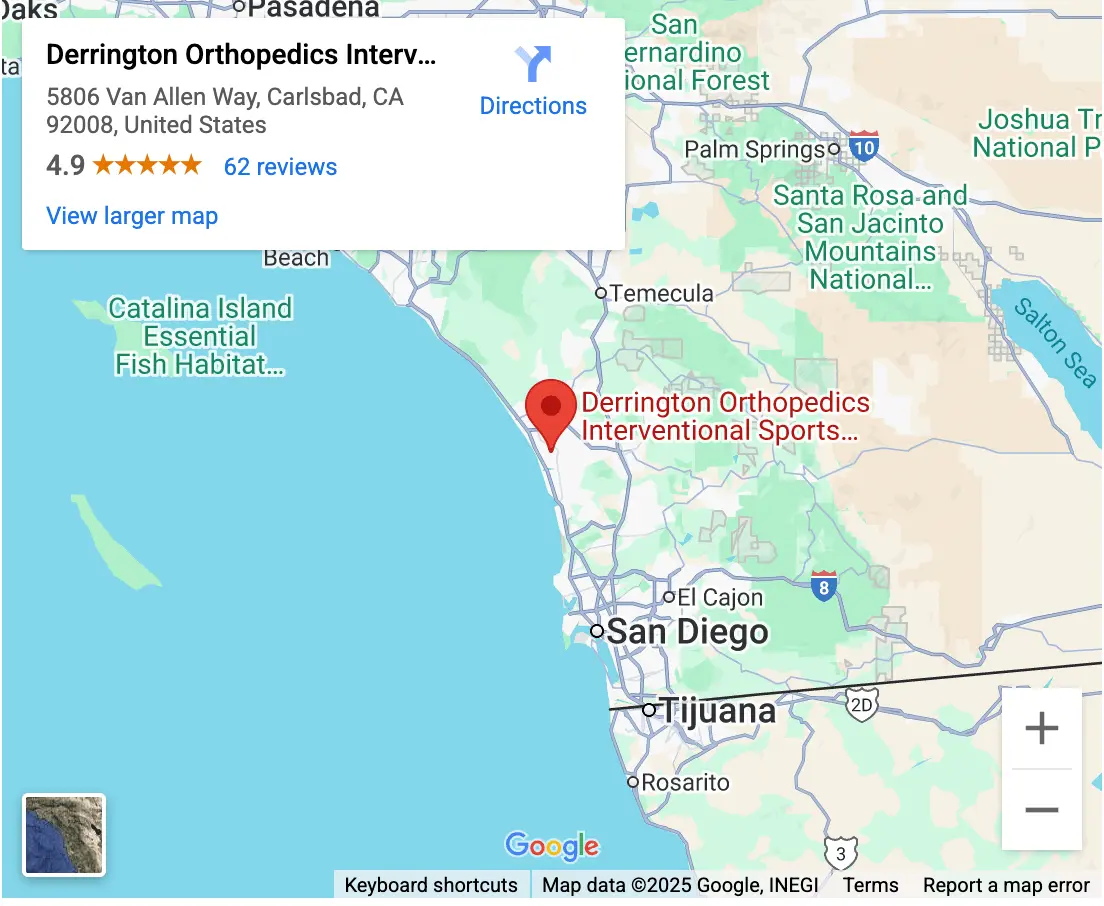
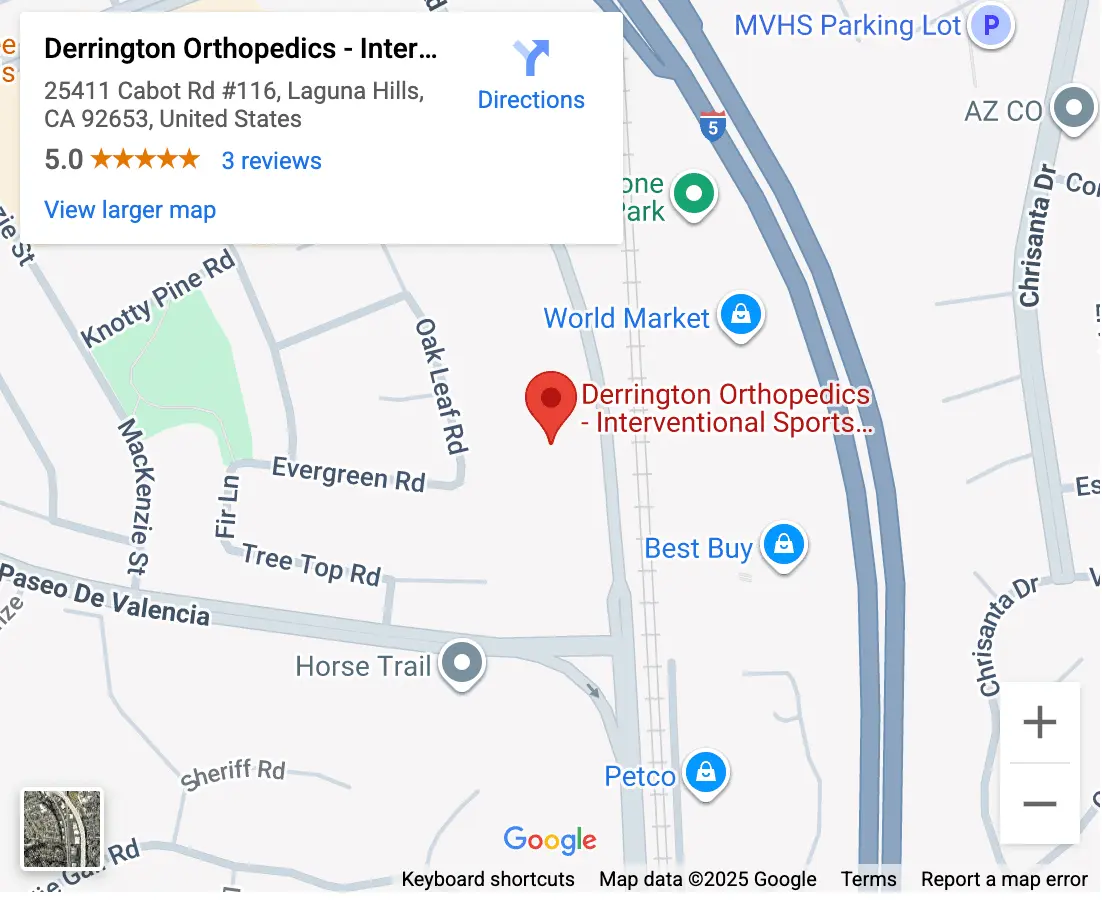
| READY TO FIND OUT IF YOU’RE A CANDIDATE? A comprehensive evaluation with Dr. Derrington includes imaging review and a clear answer on whether an orthobiologic path makes sense for your knee. We see active adults at our Carlsbad and Laguna Hills, California locations. Call (760) 721-4000 or request a consultation online, and get back to the game you love. |
Frequently Asked Questions
Is my pickleball knee pain serious, or just soreness?
Soreness that improves within two or three days of rest is normal and not a cause for concern. Pain becomes worth evaluating when it lasts longer than a week, swells repeatedly, catches or pops, or returns every time you play. Those mechanical symptoms suggest a structural issue like a meniscus injury or cartilage wear rather than simple overuse, and a thorough evaluation and imaging are the only ways to know for certain.
Am I a candidate for non-surgical treatment of pickleball knee pain?
Many active adults with injuries are strong candidates, especially when imaging shows a degenerative meniscus tear or moderate cartilage thinning. The best candidates are people who want to stay active and have not gotten lasting relief from rest, physical therapy, or cortisone. A comprehensive evaluation with imaging review confirms whether an orthobiologic approach fits your specific knee.
How is Dr. Derrington’s approach different from a standard orthopedic surgeon?
A surgeon’s training centers on operative solutions, so the conversation often moves toward what can be cut away or replaced surgically. Dr. Derrington is an interventional sports and spine physician focused on non-surgical, image-guided orthobiologic care designed to support the body’s own repair response. The starting point is whether your knee can be helped without surgery, and he will tell you honestly when surgery is the better path.
What’s the typical recovery timeline after PRP for a knee?
Most patients resume light daily activity within a few days, with the biologic repair response building over the following weeks to a few months. Many return to pickleball gradually as comfort and strength allow, guided by your physician rather than a fixed calendar. Recovery varies by the individual and the severity of the injury, which is why the plan is tailored after evaluation rather than promised in advance. He walks through the usual stages in PRP and bone marrow concentrate recovery: a realistic timeline.
Does insurance cover orthobiologic treatment?
Insurance typically covers the consultation and diagnostic imaging, and Derrington Orthopedics bills insurance for consults and exams, accepting Tricare, Medicare, and PPO plans. Orthobiologic procedures themselves are generally cash-pay, as most insurers do not cover them. The team reviews the treatment recommendations with you so there are no surprises before any treatment decision is made.
What does the consultation include?
The consultation is a comprehensive evaluation that includes a review of your imaging, a hands-on assessment, and a clear answer on whether an orthobiologic path makes sense for your knee. You leave with an understanding of what is happening in the joint and what your realistic options are. It is an evaluation, not a sales pitch, and some patients are told non-surgical care is not the right fit.
How is Regenexx PRP different from PRP at other clinics?
Regenexx PRP is processed through a specialized lab protocol that is meaningfully different from standard bedside PRP, producing a higher platelet dose and concentration. It is then delivered with ultrasound or fluoroscopic guidance to place it precisely at the site of injury rather than “close enough.” Derrington Orthopedics is the largest Regenexx provider in Southern California, which means the protocols and image-guided technique are a core part of daily practice.
What if I’ve already had PRP or injections elsewhere and they didn’t help?
A treatment that did not work elsewhere does not mean orthobiologic care is wrong for you, because results depend heavily on the preparation quality, the accuracy of placement, and whether you were the right candidate to begin with. Standard bedside PRP and an unguided injection are very different from a customized, lab-processed, and image-guided approach. A fresh evaluation with current imaging clarifies whether a different technique or a different tier of care fits your knee.
Can I keep playing pickleball while I figure this out?
Sometimes, yes, with smarter load management, and sometimes a short pause protects the joint from further injury, and the honest answer depends on what the imaging shows. Continuing to play through a mechanical knee that catches or gives way can turn a partial injury into a larger one. That is exactly the kind of question a consultation is designed to answer for your specific situation.