By Dr. Steve Derrington, DO | Board-Certified Interventional Sports & Spine Physician | Regenexx-Certified Provider
QUICK ANSWER
Cortisone or Steroid injections and PRP are two of the most common joint injections, and they do very different things. Cortisone and Steroids suppress inflammation quickly, often providing relief within days, with the effect typically fading over 6 weeks to 3 months. PRP uses your own platelets and growth factors, delivered with image guidance, to support the body’s natural repair response over weeks to months.
Cortisone is often the right choice for short-term relief or a flare. PRP is often the right choice when the goal is to address the underlying condition without surgery and limit repeated steroid exposure. At Derrington Orthopedics in Carlsbad and Laguna Hills, every patient receives a comprehensive evaluation before any injection is recommended, because the right answer depends on the joint, the imaging, and your treatment history.
You had a cortisone shot in your knee, and for six weeks it felt like a different joint. Then the relief faded, and the pain came back. The orthopedic surgeon mentioned a second shot, maybe a third, and somewhere in the back of your mind you wondered if shutting down the inflammation again was actually fixing anything, or just buying time.
That question is the right one to ask.
Cortisone is an excellent tool in the right situation. PRP is a different tool, designed to support the body’s natural repair signaling. They are not interchangeable, and neither one is universally better. The honest answer is that each injection has a place, and choosing the right one starts with understanding what each one actually does inside your joint.
What Cortisone Does (and Doesn’t Do) for Joint Pain
Cortisone is a corticosteroid. When it is injected into a joint, it suppresses the inflammatory response that drives pain and swelling. This is why patients often feel relief within days. The inflammation goes down, the pain goes down, and the joint feels more usable.
What cortisone does not do is repair tissue. It is an anti-inflammatory, not a regenerative medicine. The underlying cartilage damage, tendon thickening, or meniscal tear is still there. When the cortisone wears off, often over weeks to a few months depending on the joint and the patient, the inflammation may return because the underlying cause has not changed.
Repeat cortisone injections raise additional concerns. A randomized clinical trial published in JAMA found that triamcinolone injections given every 12 weeks for two years in patients with symptomatic knee osteoarthritis resulted in greater cartilage volume loss than saline and did not produce a significant difference in knee pain severity. [1] Reviews of musculoskeletal corticosteroid injections also identify possible local side effects, including tendon rupture, accelerated osteoarthritis progression, and osseous injury. [4]
The right time for cortisone is when fast relief is needed for a flare, when surgery is genuinely on the calendar in the near term, or when the patient is using it as a bridge rather than a long-term plan.
What PRP Does, and How It’s Different from Cortisone
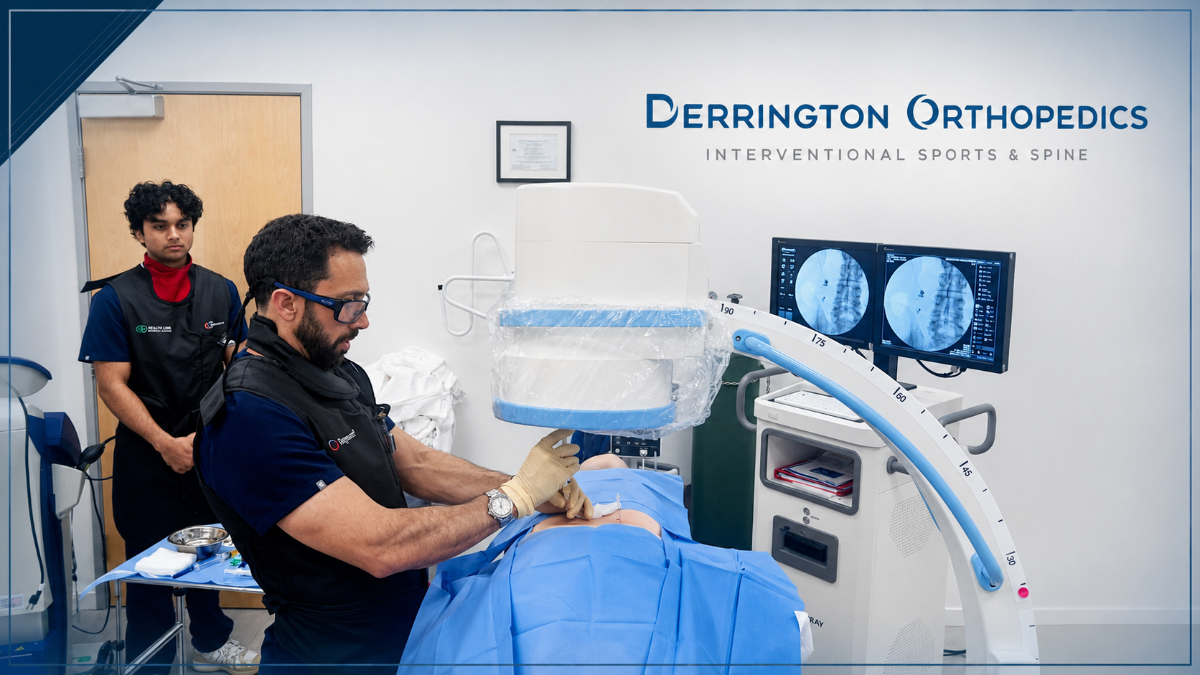
PRP, or Platelet-Rich Plasma, is a different category of injection entirely. It is autologous, which means the platelets come from your own blood. The blood is drawn, processed to concentrate the platelets and the growth factors they carry, and then injected directly into the area of injury or degeneration. In our office, the procedure is image-guided, using ultrasound or fluoroscopy, so the injection lands precisely where the damage is, not approximately near it.
The mechanism is not anti-inflammatory in the cortisone sense. Platelets contain signaling proteins that can support the body’s repair response. Over the following weeks and months, patients often experience reduced pain and improved function. Systematic reviews comparing PRP with corticosteroid injections for knee osteoarthritis suggest PRP may provide longer-term improvement for selected patients, while corticosteroids are often used for shorter-term symptom control. [2][3]
Not all PRP is the same. Standard bedside PRP, processed in a single-spin centrifuge at the point of care, typically produces lower platelet concentrations than more advanced lab-processed protocols. The Regenexx SCP protocol, which is what Derrington Orthopedics uses, is processed through Regenexx lab methods designed to customize platelet concentration and reduce unwanted blood components. The Regenexx lab-processing approach is customizable, with a different version of PRP able to be made with concentrations ranging from 2X to 20X above baseline. [5]
Physicians in the licensed Regenexx network have performed more than 132,000 procedures worldwide, and Regenexx maintains the largest and longest standing United States outcomes database tracking patients who have completed procedures using Regenexx injectates. [6]
PRP also does not carry the cumulative steroid concerns of cortisone, because it is not a steroid. Repeat treatments are sometimes appropriate, but for entirely different reasons than repeat cortisone, and based on imaging and patient response rather than as a recurring inflammation reset.
Where Each One Fits on the Severity Pathway
At Derrington Orthopedics, every joint or spine evaluation produces a tier recommendation on what the practice calls the Severity Pathway. The pathway helps patients understand where they fit and what level of intervention typically makes sense for their specific situation.
The pathway covers a wide range of conditions treated at Derrington Orthopedics, from early-stage soft-tissue irritation to advanced joint degeneration.
| Tier | Presentation | Treatment Approach |
| Tier 1: Evaluation & Relief | Early-stage symptoms, mild structural findings, soft-tissue irritation | Comprehensive Orthopedic Evaluation, MLS Laser Therapy, activity guidance. Cortisone may be appropriate here for a short-term flare. |
| Tier 2: Targeted Orthobiologic | Moderate degeneration, tendinopathy, partial soft-tissue tears | Image-guided Regenexx PRP, often paired with MLS Laser for recovery support. |
| Tier 3: Advanced Orthobiologic | Advanced degeneration, deeper structural cases that would otherwise face surgery | Image-guided Regenexx Bone Marrow Concentrate, paired with MLS Laser. |
| Home Recovery Laser | Any tier | Redvive red and near-infrared light therapy for daily home use, supporting inflammation control and tissue recovery. |
A simple way to think about it is the worn-down road analogy. A pothole in the road can be patched, and sometimes the patch is exactly what is needed. But if the road keeps cracking, the better question is whether the patch is the right long-term plan, or whether a different kind of repair would last longer.
Does one of these tiers resonate with your pain? A 60-minute evaluation with Derrington Orthopedics can help you understand your specific candidacy for non-surgical care. You can request a consultation online.
Cortisone vs. PRP vs. Surgery, and the Honest Trade-Offs
Cortisone reduces inflammation fast, requires no recovery downtime, and is widely covered by insurance. It does not repair the underlying tissue, the effect fades over weeks to months, and cumulative use raises concerns about cartilage and tendon health. Best fit: short-term flare relief or a bridge to another decision.
PRP supports the body’s own repair response, is autologous, has no cumulative treatment concerns, and is image-guided to land where the damage actually is. It is not typically covered by insurance, the effect develops over weeks rather than days, and the right candidates are determined by imaging and clinical evaluation. Best fit: patients seeking to address the underlying condition, avoid or delay surgery when appropriate, and limit steroid exposure.
Surgery is the right call for large retracted tears, end-stage joint failure, and certain mechanical problems that orthobiologics cannot resolve. It also brings anesthesia exposure, weeks to months of recovery, and a permanent change to the joint anatomy. Best fit: cases where the structural problem is beyond what biologic repair can address.
At Derrington Orthopedics, we tell patients when surgery is the right call. That is part of the practice’s credibility, because the answer is not always orthobiologic, and the evaluation is what determines fit.
Research on cortisone and PRP is still evolving, and no injection is right for every patient. Systematic reviews comparing PRP with corticosteroid injections suggest PRP may offer longer-term improvement for selected knee osteoarthritis patients, although outcomes depend on patient selection, preparation method, injection technique, and severity of joint disease. [2][3] The American Academy of Orthopaedic Surgeons technology overview reviewed 54 articles on PRP for knee osteoarthritis and highlighted both the available evidence and areas where additional research is still needed. [3]
How to Know If You’re a Candidate for PRP
The candidacy question is the right one to ask before scheduling any orthobiologic procedure. Here are the signals that a regenerative path may be appropriate for your situation.
- Imaging shows partial damage rather than complete structural failure, such as a partial-thickness rotator cuff tear rather than a complete retraction, or a degenerative meniscus rather than a locked knee.
- Cortisone has given you only short-term relief, and the pain keeps returning when it wears off.
- A surgical opinion has been offered, and you want to know whether a non-surgical path is appropriate before committing to the operating room.
- You are active or want to stay active, and you are looking for a treatment that supports your goals rather than a recovery that takes you off your feet for months.
- Physical therapy, NSAIDs, or activity modification have not produced lasting relief.
- You want to limit cumulative steroid exposure for cartilage or tendon health reasons.
Only a comprehensive evaluation with imaging review can confirm candidacy. Some patients are turned away from orthobiologic procedures when the imaging or the clinical picture does not support a likely benefit. That filter is part of how the practice protects patients and protects outcomes.
What To Do Next
If you have already had cortisone and you are wondering whether another shot is the right next move, that uncertainty is worth a 60-minute conversation. The same goes for any patient who has been told that surgery is the only path forward without an evaluation by a non-surgical specialist.
The Derrington consultation is not a pitch for a procedure. It is an evaluation, which includes a review of your imaging, a clinical exam, and a clear answer on which path is appropriate for your situation. Some patients leave with a treatment plan, others leave with a referral elsewhere, and both are honest answers.
READY TO FIND OUT IF YOU’RE A CANDIDATE?
A 60-minute comprehensive evaluation with Dr. Derrington is able to be billed through PPO and Medicare insurance, or for self pay patients the evaluation is $350, including imaging review and a clear answer on whether an orthobiologic path makes sense for your joint or spine condition. Both offices are accepting new patients.
Call (760) 721-4000 or request a consultation online.
Carlsbad: 5806 Van Allen Way, Suite 101
Laguna Hills: 25411 Cabot Rd, Suite 116
Frequently Asked Questions
Am I a candidate for PRP if cortisone hasn’t worked?
Often, yes. Cortisone failing to provide lasting relief is one of the most common reasons patients explore orthobiologic care. It can indicate that inflammation is not the only driver of your pain, and that the underlying tissue damage needs a different approach. A comprehensive evaluation with imaging review is the only way to confirm fit, but a patient who has tried cortisone without lasting benefit is often a strong candidate for the next conversation.
How is Dr. Derrington’s approach different from a standard orthopedic surgeon?
Surgeons are trained in surgery. Interventional sports and spine specialists are trained in non-surgical and image-guided procedures, which is a different specialty. At Derrington Orthopedics, we typically use orthobiologic injections during the procedure. Dr. Derrington is board-certified in Physical Medicine and Rehabilitation, Regenexx-certified, and faculty for the Interventional Orthobiologic Foundation. He evaluates whether a non-surgical path is appropriate before surgery is the recommendation, and he refers patients to surgery when that is genuinely the right call.
What’s the typical recovery timeline after PRP for joint pain?
Most patients return to light activity within a few days, with the biological response unfolding over the following weeks and months. The exact protocol depends on the joint, the imaging findings, and your activity goals. Dr. Derrington gives every patient a personalized recovery plan during the consultation, including activity progressions and add-on therapies like MLS Laser to support recovery. Dr. Derrington describes the usual stages in how long PRP takes to work and what recovery looks like.
Does insurance cover orthobiologic treatment?
PRP and Bone Marrow Concentrate are typically not covered by insurance, which is part of why the consultation discussion includes a transparent review of out-of-pocket cost for recommended treatment. The team verifies your specific plan during scheduling and reviews the financial picture with you at the consult.
What does the consultation include?
The consultation is a 60-minute comprehensive evaluation with Dr. Derrington or Dr. Worley, including a review of your imaging, a clinical exam, and a clear recommendation on which Severity Pathway tier fits your situation. You leave with an answer, including whether you are a candidate for an orthobiologic procedure or whether a different path is more appropriate.
How is Regenexx PRP different from PRP at other clinics?
The main differences are lab processing and outcomes tracking. Many standard PRP systems are processed quickly at the point of care. Regenexx affiliated clinics like Derrington Orthopedics perform customizable lab processing, with concentrations ranging from 6X to 20X, and procedures using Regenexx injectates are tracked through an outcomes database. [5][6]
What if I’ve already had PRP elsewhere and it didn’t help?
That is helpful information to bring to the consultation. The first question Dr. Derrington asks is what kind of PRP was used, how it was processed, and how the injection was guided. Standard bedside PRP and Regenexx SCP are not the same product, and differences in preparation, concentration, and image guidance can matter. The evaluation looks at whether a lab-processed, image-guided approach is appropriate for your specific case.
Can I have cortisone and PRP, or do I have to choose?
They are sometimes used at different stages, but they are not given together. If you have had recent cortisone, Dr. Derrington may recommend waiting before PRP, because steroids can influence the inflammatory signaling that PRP relies on to activate repair. The exact interval depends on the joint and the dose. The evaluation will include guidance on timing if cortisone is part of your recent history.
Sources
- McAlindon TE, LaValley MP, Harvey WF, et al. Effect of Intra-articular Triamcinolone vs Saline on Knee Cartilage Volume and Pain in Patients With Knee Osteoarthritis: A Randomized Clinical Trial. JAMA. 2017;317(19):1967-1975. doi:10.1001/jama.2017.5283. https://jamanetwork.com/journals/jama/fullarticle/2626573
- McLarnon M, Heron N. Intra-articular platelet-rich plasma injections versus intra-articular corticosteroid injections for symptomatic management of knee osteoarthritis: systematic review and meta-analysis. BMC Musculoskeletal Disorders. 2021;22:550. doi:10.1186/s12891-021-04308-3. https://bmcmusculoskeletdisord.biomedcentral.com/articles/10.1186/s12891-021-04308-3
- Dubin J, Leucht P, Murray M, Pezold R; Staff of the American Academy of Orthopaedic Surgeons. American Academy of Orthopaedic Surgeons Technology Overview Summary: Platelet-Rich Plasma (PRP) for Knee Osteoarthritis. Journal of the American Academy of Orthopaedic Surgeons. 2024;32(7):296-301. doi:10.5435/JAAOS-D-23-00957. https://pubmed.ncbi.nlm.nih.gov/38295392/
- Kamel SI, Rosas HG, Gorbachova T. Local and Systemic Side Effects of Corticosteroid Injections for Musculoskeletal Indications. AJR Am J Roentgenol. 2024;222(3):e2330458. doi:10.2214/AJR.23.30458. https://pubmed.ncbi.nlm.nih.gov/38117096/
- Regenexx. Lab Processing. Regenexx describes proprietary lab-processing methods and customizable concentrations ranging from 6X to 20X. https://regenexx.com/our-approach/lab-processing/
- Regenexx. Other Conditions. Regenexx reports more than 132,000 procedures worldwide and an outcomes database tracking procedures performed using Regenexx injectates. https://regenexx.com/conditions-treated/other-conditions/