By Dr. Steve Derrington, board-certified in physical medicine and rehabilitation
Search for PRP or “stem cell” injections in North San Diego County or South Orange County and you will find med spas, chiropractic offices, physician practices and clinics across the border in Tijuana. The products vary from one clinic to the next. So does the training of the person holding the needle and the care that goes into placing it.
Dr. Steve Derrington is a board-certified physical medicine and rehabilitation physician in Carlsbad specializing in orthobiologics and regenerative medicine. He has performed Regenexx procedures since 2016. When patients ask how to compare clinics, he points them to three questions: who is making the diagnosis, what exactly is being injected and at what dose, and how is it delivered to ensure it will reach the right spot.
Question 1: Who is making the diagnosis?
An injection can only help if it goes into the tissue that is actually causing your pain. Knee pain can come from the joint cartilage, the meniscus, a tendon, a ligament, or even the hip or lower back. Shoulder pain can come from the rotator cuff, the joint cartilage, the labrum, or a nerve in the neck. Getting that right takes training.
Dr. Derrington puts it first for that reason: “One, you got to make sure that the person doing the evaluation knows how to do the evaluation.”
He is direct about who that person should be: “So they should be an orthopedic-focused person, ideally a physician, that has that training, not somebody who took a weekend course on how to do an injection or to talk about these kind of procedures.”
And he sums it up this way: “So diagnosis is the first thing that you’ve got to be able to get right.”
Questions to ask:
- Who will examine me, and what is their medical training?
- Will the person who examines me also perform the procedure?
- Will you look at my MRI or X-rays yourself, and will you examine me in person before recommending anything?
Question 2: What are you injecting, and at what dose?
Dr. Derrington’s next point is simple: “What are they injecting? How are they injecting it? Those are two important factors.”
PRP (platelet-rich plasma) is made from a sample of your own blood. Bone marrow aspirate concentrate, often called BMAC, is made from bone marrow drawn from the back of your pelvis. It contains stem cells along with other cells and growth factors. Both are prepared the same day from your own body. Many clinics sell something quite different: products they buy from outside suppliers, made from umbilical cord, amniotic tissue or exosomes.
The U.S. Food and Drug Administration warns consumers that the only stem cell products it has approved are blood-forming cells from umbilical cord blood, used for blood disorders, and that no exosome products are approved (FDA). In 2018 the CDC reported 12 patients in Texas, Florida and Arizona who were hospitalized with infections after receiving unapproved umbilical cord blood products (CDC MMWR).
Even when two clinics both say “PRP,” they may not be giving you the same thing. Dr. Derrington asks: “What kind of dose of the platelets and the growth factors are they delivering?”
Research backs up his concern. A 2019 review of 33 PRP systems and protocols found large differences in platelet concentration between systems and called for standardization (Fadadu et al., 2019). The American College of Rheumatology’s 2019 osteoarthritis guideline recommended against PRP for knee and hip arthritis, citing that same lack of standardization (Kolasinski et al., 2020). Dose may matter too. In a 2024 randomized trial of patients with early knee arthritis, an 8 mL PRP injection with about twice the platelets outperformed a 4 mL injection at six months, though short-lived soreness and stiffness were more common with the larger dose (Patel et al., 2024).
That is why Dr. Derrington says: “If they can’t tell you about their system and can’t tell you about the numbers of what they’re delivering, they probably don’t really know that there’s a difference between different kinds of PRP.”
Questions to ask:
- What exactly is in the syringe, and does it come from my own body?
- What system do you use to prepare it?
- What platelet or cell dose are you aiming for, and how do you measure it?
Question 3: How will you get it to the right spot?
“But a lot of times we’re treating very small, sometimes millimeter sized problems.”
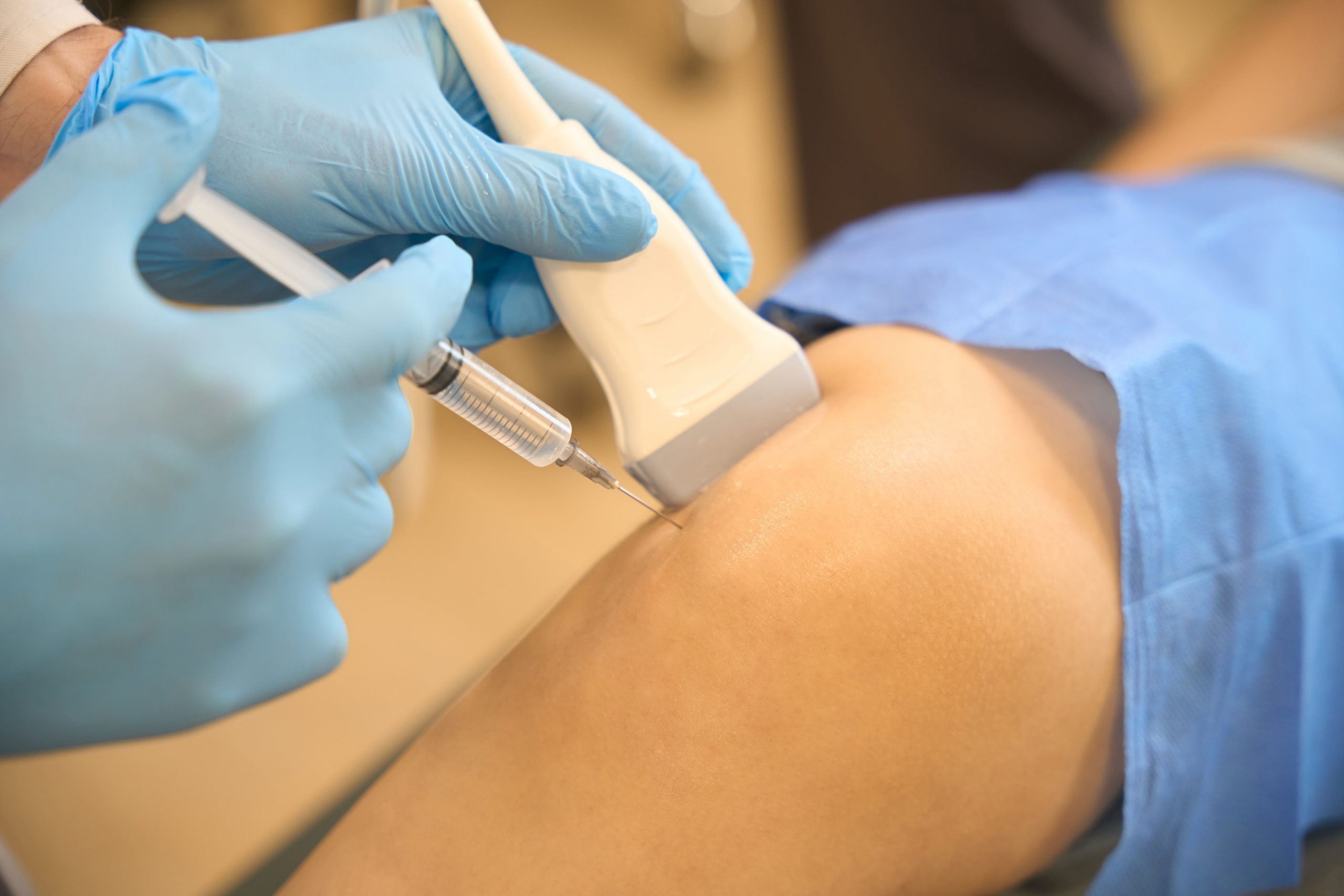
A partial tendon tear or a small area of damage inside a joint is hard to hit by feel. Dr. Derrington explains what he expects instead: “So they should be using image guidance, depending on the kind of problem should be an ultrasound or should be an x ray machine, which is a live x ray, to make sure that you’re delivering to the exact right place.”
Accuracy also protects you. Many of the areas he treats sit close to blood vessels and nerves. In his words: “So you want to make sure that you’re being safe and accurate with the delivery.”
Questions to ask:
- Will you use ultrasound or live X-ray (fluoroscopy) to guide the needle?
- Who performs the imaging, and can I see it during the procedure?
Warning signs worth walking away from
- A guarantee that you will be pain-free, or a promise that one injection will fix your condition for good.
- Claims to treat a long list of unrelated diseases with the same product.
- No hands-on exam before you are asked to book or pay.
- No clear answer about what is in the syringe or where it came from.
- Injections into small targets without imaging guidance.
Comparing clinics in North San Diego County and South Orange County
Southern California has more of these clinics than most of the country. A 2016 study of businesses marketing stem cell treatments directly to consumers counted 113 clinics in California, more than any other state, and noted a high concentration around Los Angeles and San Diego (Turner and Knoepfler, 2016). The border adds to the confusion. As Dr. Derrington describes it: “we’re in Southern California, I’m in San Diego, super close to Tijuana, we get a lot of patients wondering about stem cells and kind of lumping them all together, thinking they’re all the same.”
Insurance is another common question. These procedures are not covered by insurance, and the American Academy of Orthopaedic Surgeons notes that few insurance plans provide even partial reimbursement for PRP (AAOS OrthoInfo). When you compare clinics, ask what the visit includes: a hands-on exam, imaging guidance, and a clear answer about the dose.
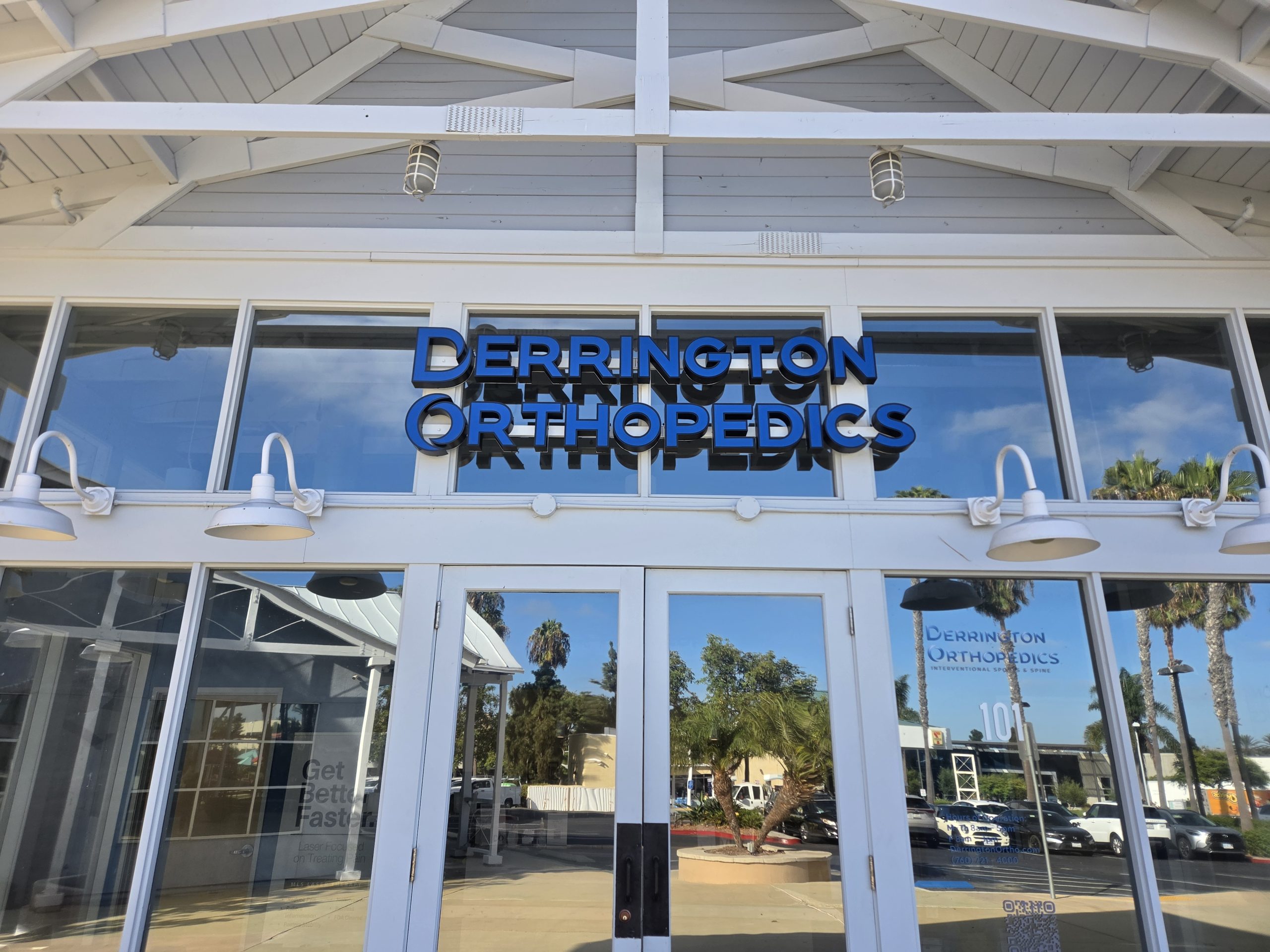
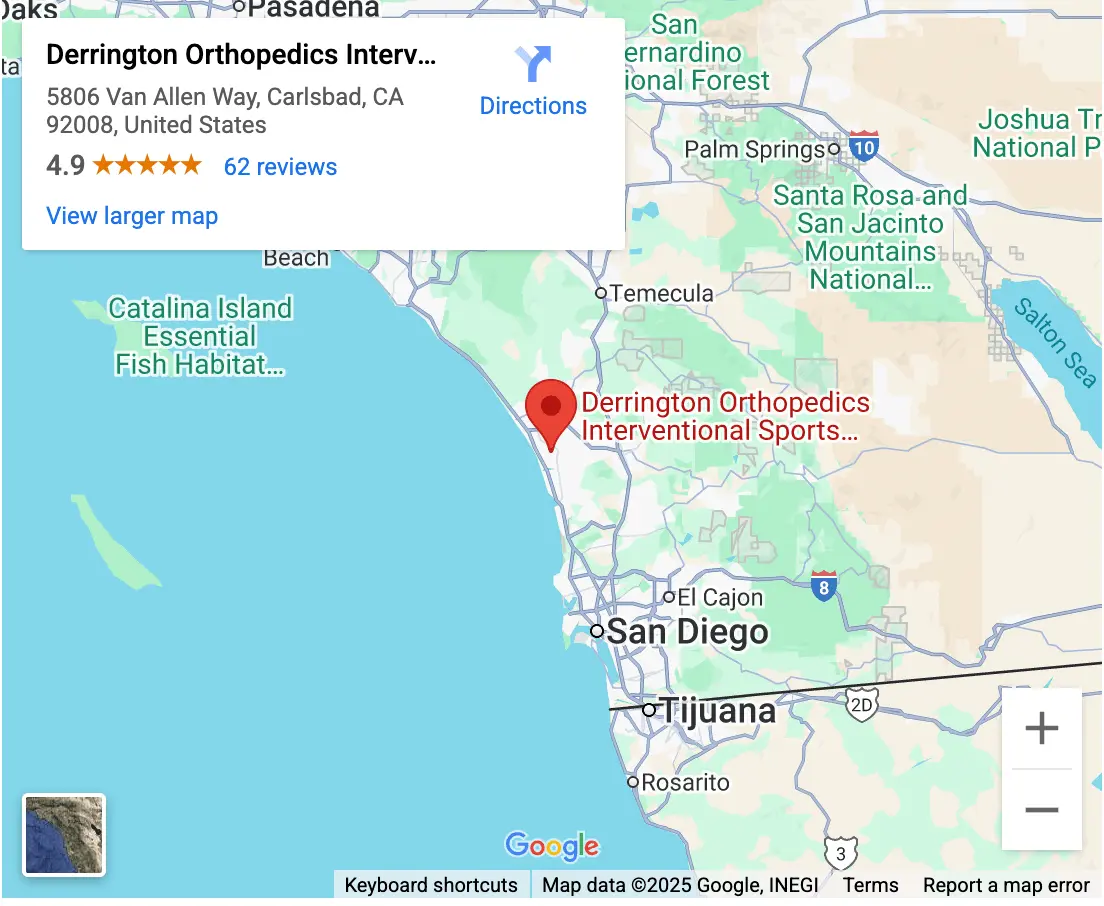
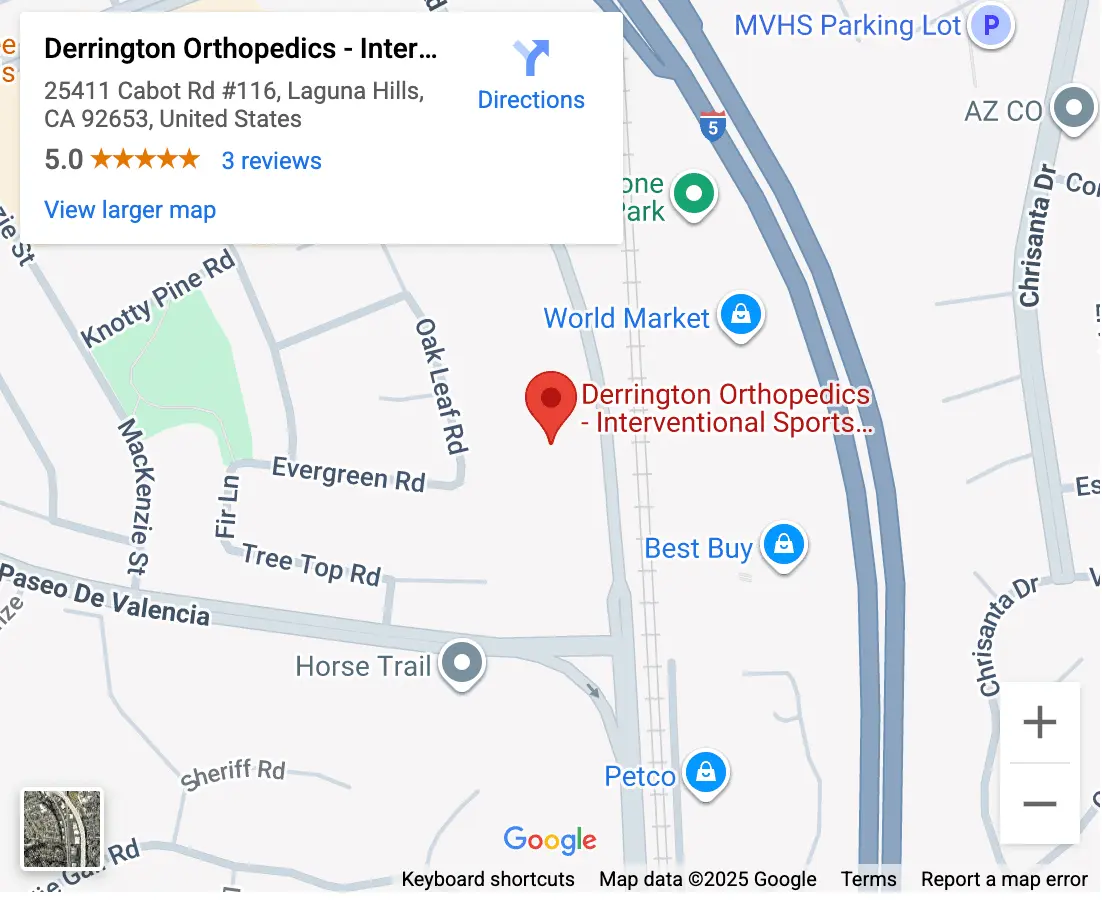
Dr. Derrington sees patients at the Carlsbad office (5806 Van Allen Way, Suite 101, Carlsbad, CA 92008) and on Tuesdays at the Laguna Hills office (25411 Cabot Rd, Suite 116, Laguna Hills, CA 92653). Both offices share one phone number: (760) 721-4000. You can also request an appointment online.
Frequently asked questions
Does it matter who performs my PRP injection?
Yes. Dr. Derrington says: “So they should be an orthopedic-focused person, ideally a physician, that has that training, not somebody who took a weekend course on how to do an injection or to talk about these kind of procedures.”
What should a clinic be able to tell me about PRP dose?
They should be able to name the system they use and the numbers they aim for. In his words: “If they can’t tell you about their system and can’t tell you about the numbers of what they’re delivering, they probably don’t really know that there’s a difference between different kinds of PRP.”
Should PRP or bone marrow injections be guided by ultrasound or X-ray?
For most of the small targets he treats, Dr. Derrington says yes: “So you want to make sure that you’re being safe and accurate with the delivery.”
Are donor “stem cell” products the same as bone marrow concentrate?
No. Bone marrow concentrate is drawn from your own pelvis and prepared the same day. Products made from umbilical cord or amniotic tissue come from donors, and the FDA has warned about unapproved products of this kind (FDA).
Does insurance cover PRP?
No. These procedures are not covered by insurance. The AAOS notes that few insurance plans provide even partial reimbursement for PRP (AAOS OrthoInfo).
Sources
- Fadadu PP, et al. Review of concentration yields in commercially available platelet-rich plasma (PRP) systems: a call for PRP standardization. Reg Anesth Pain Med. 2019. PubMed 30992411
- Kolasinski SL, et al. 2019 American College of Rheumatology/Arthritis Foundation Guideline for the Management of Osteoarthritis of the Hand, Hip, and Knee. Arthritis Care Res. 2020. PubMed 31908149
- Patel S, et al. Comparison of conventional dose versus superdose platelet-rich plasma for knee osteoarthritis. Orthop J Sports Med. 2024. PubMed 38410168
- U.S. Food and Drug Administration. Consumer Alert on Regenerative Medicine Products Including Stem Cells and Exosomes
- CDC. Bacterial infections linked to the use of umbilical cord blood-derived stem cell products. MMWR. 2018. Link
- Turner L, Knoepfler P. Selling stem cells in the USA. Cell Stem Cell. 2016. PubMed 27374789
- American Academy of Orthopaedic Surgeons. OrthoInfo: Platelet-Rich Plasma (PRP)
Medical disclaimer: This article is general education. It does not replace an exam or medical advice for your situation. Results from PRP and bone marrow concentrate procedures vary, and no treatment helps everyone. If you have sudden severe pain, a hot, swollen joint with fever, new weakness or numbness, or loss of bladder or bowel control, seek urgent medical care.